
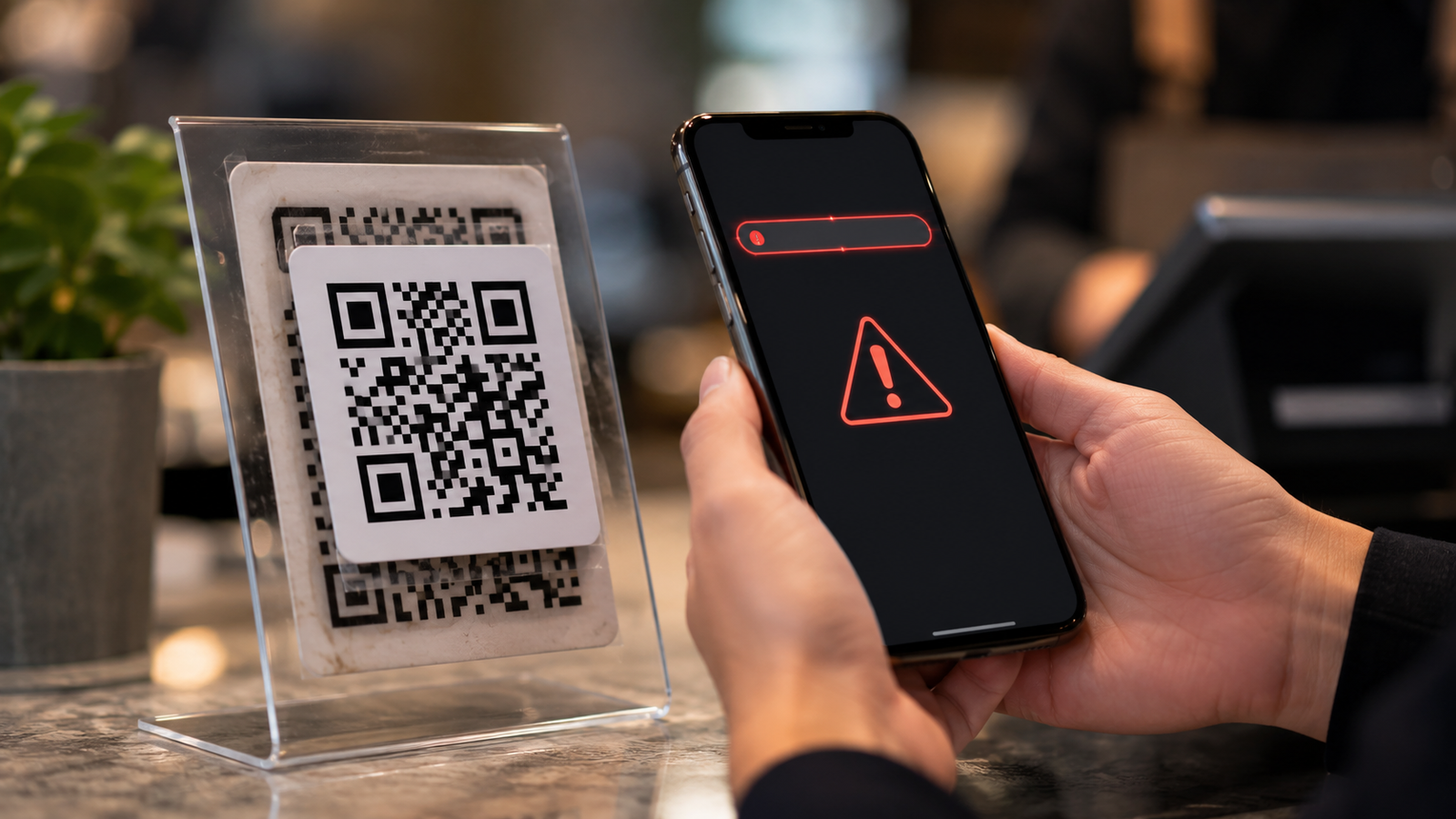
Cybersecurity threats are changing every year. Today, attackers are not only using fake emails and suspicious links. They are also using QR codes to trick users. This method is known as QR code phishing, and it is becoming a serious concern for students, employees, and businesses.
QR codes are used everywhere. We scan them for payments, menus, forms, tickets, offers, and login pages. Because people trust QR codes, attackers are now using them to hide malicious links. APWG reported over 1 million phishing attacks in Q1 2025 and noted that criminals were sending millions of emails containing QR codes that lead users to phishing sites and malware.
What Is QR Code Phishing?
QR code phishing happens when attackers create a fake QR code that sends users to a harmful website. The page may look like a real login page, payment page, or company form. However, when users enter their details, the information goes directly to the attacker.
For example, a student may receive an email saying, “Scan this QR code to verify your account.” The QR code may open a fake login page that looks real. As a result, the student may enter their username, password, or personal details without knowing it is a scam.
Why QR Code Phishing Is Dangerous
Traditional phishing links can sometimes be detected by email security filters. However, QR codes are image-based. This makes them harder for some security tools to read and block. Moreover, users often scan QR codes using mobile phones, where security protection may be weaker.
QR code phishing is also dangerous because it creates a sense of trust. People usually do not check the final URL after scanning a code. Instead, they quickly follow the page and complete the action. This simple habit gives attackers a better chance to steal information.
Reports in 2026 also show that QR-based phishing attacks are increasing as attackers try to bypass traditional email security systems.
How Businesses Are Affected
Businesses can lose sensitive data because of QR code phishing. Attackers may target employees with fake login pages, fake meeting invites, fake payment requests, or fake document access pages. If one employee enters their credentials, attackers may gain access to company systems.
In addition, attackers may place fake QR codes in public areas. They can stick them over real payment QR codes, posters, or service forms. Because of this, customers may scan the wrong code and lose money or personal data.
Why Students Should Learn About This
Students who want a career in cybersecurity must understand real-world threats. QR code phishing is a simple attack method, but it can create serious damage. Therefore, students should learn how phishing works, how fake websites are created, and how users can be protected.
A practical cybersecurity course helps students learn email security, web security, social engineering, network security, and incident response. Moreover, students can understand how attackers think and how security teams prevent these attacks.
How to Stay Safe
To avoid QR code phishing, users should check the website link after scanning a QR code. They should avoid entering passwords or payment details on unknown pages. In addition, they should use multi-factor authentication for important accounts.
Businesses should train employees to identify suspicious QR codes. They should also use secure QR code systems, endpoint protection, and regular security awareness sessions. As a result, they can reduce the risk of phishing attacks.
Conclusion
QR code phishing is a growing cybersecurity threat because it uses something people already trust. A simple scan can lead to fake websites, stolen passwords, malware, or financial loss. Therefore, students and professionals must take this threat seriously.
Cybersecurity is not only about advanced hacking tools. It is also about understanding everyday risks. By learning about QR code phishing, students can build practical awareness and prepare for modern cybersecurity careers.